

Best Beginner Bodyweight Workouts at Home for Effective Strength Building

Starting a workout routine at home doesn’t have to be complicated or require special equipment. The best beginner bodyweight workouts focus on simple movements that build strength, increase flexibility, and improve endurance. These workouts are effective because they use your own body weight as resistance, making them accessible and easy to modify.
You can target multiple muscle groups with exercises like squats, push-ups, and planks, which form the foundation of effective beginner workouts. Consistency and proper form are key to seeing progress without injury.
This guide will share beginner-friendly routines designed to build confidence and fitness gradually. Whether you’re completely new or returning after a break, these workouts offer a clear path to improve your health at home.
Benefits of Bodyweight Workouts for Beginners
Bodyweight workouts are effective for building foundational fitness goals at home. They enhance multiple physical abilities while being simple to start and maintain. This approach supports strength, flexibility, safety, and budget considerations that new exercisers often prioritize.
Improved Strength and Flexibility
Bodyweight exercises use your own weight to create resistance, which promotes muscle growth and joint mobility simultaneously. Movements such as push-ups, squats, and planks engage various muscle groups, improving overall functional strength without added equipment.
Flexibility improves as many bodyweight workouts incorporate dynamic stretches and a full range of motion movements. This helps reduce stiffness and increase mobility over time. Consistent practice lowers muscle imbalances and supports better posture.
Beginners can progressively increase difficulty by adjusting tempo or modifying angles, which fosters steady strength gains and enhanced flexibility without the need for heavy weights or machines.
Low Risk of Injury
Performing exercises that use body weight reduces stress on joints compared to heavy lifting or complex gym equipment. The controlled nature of these workouts makes them safer for those new to training or with limited mobility.
Proper technique is easier to focus on with fewer variables involved, such as external resistance or complicated movements. This lowers the chance of strain or injury while developing coordination.
Gradual progression in difficulty also helps avoid overexertion. Most bodyweight exercises can be adapted in intensity to fit individual fitness levels, making it manageable for beginners to train consistently and safely.
Cost-Effective Fitness Solution
Bodyweight workouts require no special equipment, gym memberships, or expensive gear. This makes them accessible to anyone, regardless of budget or location.
Using minimal space and only your body weight, you can perform effective workouts at home, in a park, or while traveling. This flexibility saves time and money needed for commuting or joining fitness centers.
Cost savings do not mean sacrificing quality. Many effective workout routines and progressions are freely available online, allowing beginners to learn and improve without financial barriers.
Key Principles of Beginner Bodyweight Training
Bodyweight training requires attention to preparation, precise execution, and a gradual increase in difficulty. Warming up correctly protects muscles and joints, while maintaining proper form avoids injuries. Increasing workout demands slowly ensures continuous progress without overexertion.
Proper Warm-Up Techniques
Warming up raises your heart rate and increases blood flow to muscles, preparing the body for exercise. Spend 5 to 10 minutes doing light cardio movements like jogging in place, jumping jacks, or dynamic stretches such as leg swings and arm circles. These movements loosen joints and activate muscles used in bodyweight exercises.
Avoid static stretching before workouts, as it can reduce muscle strength temporarily. Instead, focus on dynamic mobility drills targeting areas like hips, shoulders, and knees. This preparation reduces injury risk and improves exercise performance.
Form and Technique Essentials
Maintaining correct form is crucial to maximizing benefits and minimizing injury risk. For example, during a push-up, keep your spine neutral, hands shoulder-width apart, and elbows angled about 45 degrees to the body. Engage your core to prevent sagging hips.
Move through full ranges of motion slowly and with control. If a movement feels too difficult, modify it rather than compromising form. Use mirrors or record yourself to check posture and alignment. Consistency in technique builds strength efficiently and reduces stress on joints.
Progressive Overload Strategies
Progressive overload means gradually increasing workout difficulty to promote muscle adaptation. Start with easier variations of exercises and increase repetitions, sets, or workout frequency over time. For instance, begin with wall push-ups, then move to knee push-ups, and finally standard push-ups.
Incorporate tempo changes by slowing down the movement or pausing at the most challenging point. Adding isometric holds or reducing rest periods also enhances training intensity. Track progress with a workout log to adjust the plan consciously and avoid plateaus.
Essential Bodyweight Exercises for Home
Mastering a few key movements can build strength, improve stability, and enhance overall fitness using only your body weight. Focus on controlled techniques in foundational exercises to promote steady progress and reduce injury risk. These movements target major muscle groups and can be adjusted as strength improves.
Push-Ups Variations
Standard push-ups primarily target the chest, shoulders, and triceps. For beginners, modified versions like knee push-ups or wall push-ups reduce load while building foundational strength. Maintaining a straight line from head to heels is essential for form and to avoid strain.
Once comfortable, progress to incline push-ups by placing hands on a raised surface. This increases difficulty but remains manageable. Hand placement can also be varied—wide for more chest activation or narrow to emphasize triceps.
Push-ups improve upper body strength and core stability. Controlled lowering and raising phases maximize muscle engagement and minimize momentum reliance.
Squat Forms for Beginners
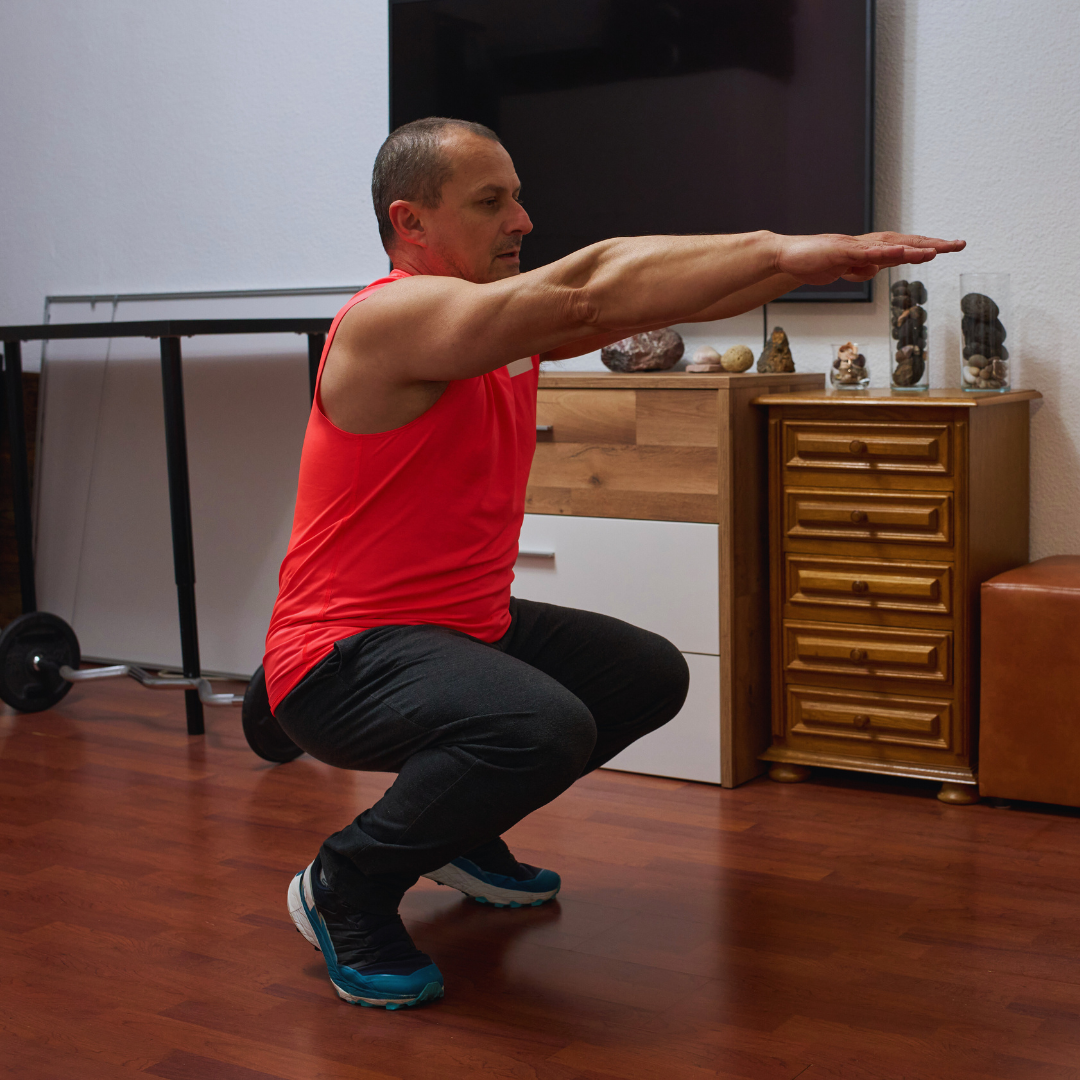
Squats engage the thighs, hips, glutes, and lower back. Start with chair squats to learn proper form: lower hips to sit briefly on a chair, then stand up with weight distributed evenly on feet.
Keep feet shoulder-width apart, chest lifted, and knees tracking over toes. Avoid letting knees collapse inward or leaning too far forward.
Bodyweight squats can be varied by stance width or by adding a pause at the bottom to increase time under tension. Slow, deliberate movements improve muscle activation and joint control.
Core Stability Movements
Core stability supports posture and protects the spine during movement. Begin with planks, holding a straight-lined position from head to heels on forearms and toes.
Side planks target the obliques and improve lateral stability. Start holding for 15-20 seconds and increase as strength allows.
Bird dogs engage the lower back and abdominal muscles together, promoting balance and coordination. Extend opposite arm and leg while maintaining a neutral spine.
Consistent practice strengthens deep core muscles essential for all other bodyweight exercises.
Bodyweight Rows
Bodyweight rows develop upper back and biceps strength. Use a sturdy horizontal bar, a broomstick between two chairs, or a low table edge for pulling.
Keep the body in a straight line and pull the chest toward the bar, squeezing shoulder blades together. Lower down with control.
Adjust difficulty by raising or lowering foot placement—the more horizontal the body, the harder the row.
Rows balance push exercises like push-ups and improve posture by strengthening the rear shoulder muscles.
Sample Beginner Bodyweight Workout Routines
These workouts target different muscle groups and fitness goals using easy-to-follow exercises. Each routine balances intensity and rest for effective strength building without equipment.
Full-Body Circuit Plan
This plan activates all major muscle groups within a short time, ideal for overall fitness. Perform each exercise for 30 seconds, followed by 15 seconds of rest. Repeat the circuit 3 times.
- Bodyweight squats – focus on form, keep knees behind toes.
- Incline push-ups – hands on a sturdy surface for easier push-ups.
- Glute bridges – squeeze glutes at the top for max activation.
- Plank hold – keep body straight and core tight.
- Superman lifts – raise arms and legs off the floor to strengthen the back.
This routine can be done 3-4 times weekly, allowing at least one rest day between sessions.
Upper Body Focus Routine
Designed to build strength in the arms, chest, and shoulders with simple moves. Perform 3 sets of 10-12 reps per exercise with 30 seconds rest between sets.
- Wall push-ups – reduce load by standing closer to the wall.
- Arm circles – do forward and backward circles to warm up your shoulders.
- Tricep dips on chair – keep elbows pointed backward, not flared.
- Shoulder taps in plank – alternate tapping each shoulder without hips swaying.
This routine improves arm tone and shoulder stability, suitable for beginners new to upper body training.
Lower Body Focus Routine
Targets legs and glutes with controlled motions to build strength. Complete 3 sets of 12-15 reps, resting 30-45 seconds between sets.
- Step-ups on a low platform – alternate leading legs, focus on balance.
- Wall sit hold – slide down into a seated position, keep back flat.
- Calf raises – rise on toes slowly, hold briefly at the top.
- Lunges – step forward, lower until knees are at 90 degrees.
This workout strengthens lower-body muscles and enhances joint stability, beneficial for daily movement and posture.
How to Track Progress and Stay Motivated
Tracking progress requires clear goals, regular measurement of strength improvements, and a routine that fits your home environment. Staying motivated is easier when achievements are visible, and consistency is maintained through structured habits and accountability.
Setting Achievable Fitness Goals
Start by defining measurable, realistic objectives. Instead of “get stronger,” choose goals like “complete 10 push-ups in a row” or “hold a plank for 30 seconds.” Break larger goals into weekly or monthly milestones to maintain focus and prevent burnout.
Write goals down and keep a log. Use apps, notebooks, or calendars to record workouts and improvements. This visual progress keeps motivation high and helps adjust targets if needed.
Aim for variety but keep goals simple at first. Adjust intensity or reps based on how your body responds. Clear, time-based goals avoid vague, untrackable aims.
Monitoring Bodyweight Strength Gains
Track improvements through reps, sets, and hold times for exercises like squats, push-ups, or planks. Take notes on how many repetitions you can do and how you feel during each session.
Consider taking short videos or photos weekly to observe posture and form changes. Visual evidence can reveal progress not obvious in numbers alone.
Use simple tables to record workouts:
| Exercise | Day 1 Reps | Day 7 Reps | Notes |
| Push-ups | 5 | 8 | Felt more controlled |
| Plank (sec) | 20 | 30 | Improved core stability |
Review your records weekly and tweak workouts accordingly.
Staying Consistent at Home
Designate a specific space and time for workouts to establisha routine. Consistency depends on reducing barriers like distractions or a lack of equipment.
Use reminders via phone alarms or calendars to keep workout times protected. Short sessions of 15–20 minutes daily can be more sustainable than long, infrequent workouts.
Reward consistency, not just results. Track days completed and set small non-food rewards. Engage family or friends for support or accountability when possible.
Modifying Bodyweight Workouts for Different Fitness Levels
Adjusting workouts is crucial to match your current fitness and available space. It ensures proper challenge and safety, helping maintain consistency and avoid injury.
Making Exercises Easier or Harder
To make exercises easier, reduce the range of motion or perform fewer repetitions. For example, knee push-ups instead of standard push-ups lower the upper body load. Slower movement can also decrease intensity.
Increasing difficulty involves adding reps, sets, or increasing tempo. You can switch to advanced variations like pike push-ups or single-leg squats. Using pauses or isometric holds, such as a plank hold, increases muscle engagement.
Example modifications:
| Exercise | Easier Version | Harder Version |
| Push-up | Knee push-up | Decline push-up |
| Squat | Half squat | Jump squat |
| Plank | Knee plank | Plank with arm lift |
Adapting Workouts for Limited Space
When space is tight, choose exercises with a minimal movement footprint. Stationary moves like planks, wall sits, and mountain climbers work well without requiring room to move forward or backward.
Modify dynamic exercises by shortening the range or substituting with stationary versions. For example, replace jumping lunges with static lunges or split squats. A yoga mat or a small, clear area can suffice for these exercises.
Keep workout transitions smooth by organizing exercises close together to avoid excessive repositioning. This saves time and maintains workout flow despite limited space.
Common Mistakes to Avoid in Home Bodyweight Workouts
Many beginners underestimate the importance of preparation and technique. Proper recovery and attention to form are essential for steady progress and injury prevention.
Neglecting Warm-Ups and Cool-Downs
Skipping warm-ups increases the risk of strains and limits your workout effectiveness. A focused 5-10 minute warm-up improves blood flow and prepares muscles for exercise.
Effective warm-ups include movements like dynamic stretches, arm circles, and light jogging in place. These elevate your heart rate gradually without tiring you out.
Cool-downs help reduce muscle soreness and aid recovery. Simple static stretching and deep breathing for 5-10 minutes improve flexibility and lower post-workout stiffness.
Overtraining Without Adequate Recovery
Working out every day without rest can lead to fatigue, decreased performance, and injury. Muscles need time to repair and strengthen after workouts.
Aim for at least one full rest day per week, or alternate intense sessions with lighter activities. Monitor how your body feels to avoid burnout.
Signs of overtraining include persistent soreness, irritability, and trouble sleeping. Adjust your schedule or intensity to prevent these issues.
Skipping Proper Technique
Incorrect form reduces workout benefits and increases injury risk. Maintaining alignment and movement control is more important than counting reps.
Use mirrors, videos, or progress at a slower pace to ensure correct posture and motion. For example, keep your core engaged during planks and avoid letting knees collapse in squats.
If unsure about a movement, seek guidance from trusted sources or professionals to build a strong foundation.
Tools and Resources for Home Bodyweight Training
Effective home bodyweight training relies on tracking progress, following clear instructions, and having access to basic equipment. Utilizing digital tools and minimal gear can help beginners develop consistency and improve results.
Recommended Apps for Tracking Workouts
Apps like Fitbod, MyFitnessPal, and Nike Training Club offer workout tracking tailored for bodyweight exercises. These apps allow users to log sets, reps, and rest times, providing structured routines for beginners.
Many include reminders and progress charts, encouraging consistent effort. Some apps also suggest modifications based on performance, helping users gradually increase intensity without injury risks. Choosing an app with an intuitive interface ensures ease of use and sustained engagement.
Online Video Guides
High-quality video guides from platforms such as YouTube and Fitness Blender provide step-by-step demonstrations of bodyweight moves. Visual instructions reduce the risk of improper form and make learning new exercises easier.
Channels like MadFit and HASfit offer free beginner-friendly workouts that focus on safe progressions. Videos often include timer-based routines that help structure training sessions without requiring a timer app.
Minimal Equipment Options
While bodyweight workouts require little gear, some tools enhance variety and intensity. Items like a pull-up bar, resistance bands, or an exercise mat improve comfort and allow access to additional exercises.
Resistance bands, for example, add adjustable resistance for pull-aparts or assisted push-ups. A sturdy pull-up bar enables upper-body work that’s otherwise unavailable at home. These minimal investments expand workout options without requiring a large space or bulky machines.
Long-Term Progression and Next Steps
After mastering basic bodyweight exercises, it’s important to increase the challenge gradually. This prevents plateaus and keeps your muscles adapting. Progression can be achieved by increasing repetitions, sets, or reducing rest time between exercises.
Adding variations is another effective way to advance. For example, move from standard push-ups to incline or decline push-ups. You can also incorporate plyometric movements like jump squats for more intensity.
Tracking your progress helps identify improvements. Use a simple chart to log the number of reps, sets, and how you feel after workouts to stay motivated.
| Progression Method | Description | Example |
| Increase volume | More reps or sets | 3 sets of 12 push-ups → 4 sets |
| Decrease rest | Shorter breaks between sets | 60 sec rest → 30 sec rest |
| Exercise variation | Introduce harder exercise forms | Knee push-ups → standard push-ups |
| Add intensity | Increase speed or include jumps | Regular squats → jump squats |
Once comfortable, consider integrating minimal equipment like resistance bands. This adds new resistance levels while staying home-friendly.
Consistency is key. Gradual and steady improvement reduces injury risk and builds strength effectively over time.